Pantone Colour of the Year 2026: Cloud Dancer and the New Language of Branding
Why Pantone’s lightest-ever choice marks a cultural and commercial turning point
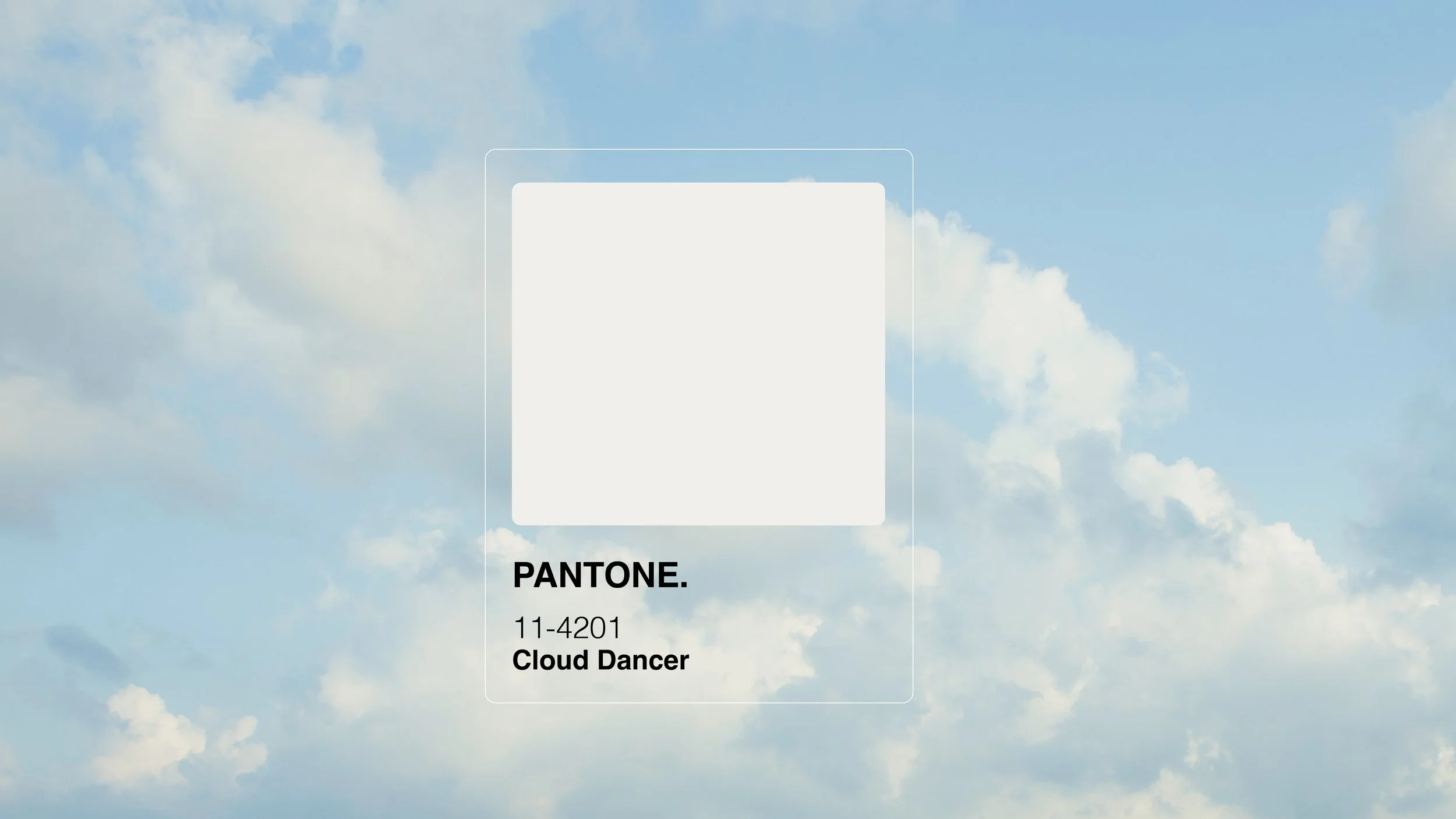
Pantone has officially announced its Colour of the Year for 2026 as PANTONE 11-4201 Cloud Dancer, an ethereal, softly balanced white. Far from a neutral non-decision, Cloud Dancer represents a deliberate cultural response to overstimulation, volatility and visual excess. For brands, this colour signals a profound shift in how identity, trust and sophistication will be expressed in the years ahead. In 2026, colour will not compete for attention. It will create space for meaning.
Pantone’s annual Colour of the Year announcement has long been a barometer of collective mood. Since its inception, the programme has translated social undercurrents into a single chromatic expression, influencing everything from fashion and interiors to technology, packaging and advertising. The 2026 announcement is notable not because it is loud, but because it is restrained. Cloud Dancer is the lightest, quietest and most conceptually charged choice Pantone has ever made.
This article examines why Cloud Dancer matters, what it tells us about the cultural moment we are entering, and how brands should expect this colour to shape visual identity, marketing and storytelling throughout 2026 and beyond.
Cloud Dancer explained
Pantone describes Cloud Dancer as a “lofty white” that is soft rather than stark, warm rather than clinical. It evokes air, light and pause. This is not the sharp white of minimal modernism, nor the cold white of technology-led design. Instead, Cloud Dancer sits somewhere between material and atmosphere. It feels breathable.
In practical terms, Cloud Dancer is an off-white with subtle warmth, designed to feel expansive and emotionally reassuring. Conceptually, it functions as a reset. Pantone positions the colour as an invitation to slow down, clear mental clutter and reconnect with intention.
That framing is critical. Colour choices at this level are never purely aesthetic. They are cultural signals.
Why Pantone chose restraint in 2026
The decision to crown a near-white as Colour of the Year reflects a deeper shift underway across society. After years defined by disruption, acceleration and constant digital noise, there is a growing appetite for calm and coherence.
Visual culture has reached saturation. Social feeds are dense with colour, motion and contrast. Branding over the past decade has often been driven by visibility at any cost. The result is a landscape that feels exhausting rather than engaging.
Cloud Dancer is Pantone’s answer to that fatigue. It does not seek to dominate the visual field. Instead, it creates room for reflection. In doing so, it aligns with broader movements toward slower fashion, considered consumption and emotionally intelligent design.
Importantly, restraint should not be confused with retreat. Choosing such a subtle colour requires confidence. It assumes that meaning, craftsmanship and narrative can carry a brand without the support of visual theatrics.
The psychology of light and space
From a branding perspective, Cloud Dancer’s impact lies in psychology as much as aesthetics. Light colours are proven to reduce cognitive load, improve legibility and support comprehension. They allow the eye to rest.
White and near-white tones are also strongly associated with honesty, transparency and openness. In sectors where trust is paramount, technology, finance, healthcare and sustainability, this association is particularly valuable.
Cloud Dancer takes these benefits further by avoiding sterility. Its warmth makes it human. This is crucial at a time when audiences are increasingly wary of overly polished, impersonal brands. The colour communicates calm competence rather than cold perfection.
How Cloud Dancer will appear in branding
In 2026, Cloud Dancer is unlikely to replace established brand colours outright. Instead, it will reshape how colour is deployed within brand systems.
We can expect to see it used as a primary background or base tone, creating visual breathing space across websites, packaging and printed materials. Logos may become more restrained in scale, allowing typography and proportion to do more of the work. Accent colours will appear with greater intention, used to guide attention rather than decorate surfaces.
For luxury brands, Cloud Dancer reinforces ideas of quiet confidence and timelessness. For technology and wellness brands, it suggests ease of use and emotional clarity. For editorial and cultural brands, it offers a neutral stage on which language and imagery can perform.
This approach also supports longevity. Calm palettes age more gracefully than trend-led colours, making them attractive to brands seeking durability rather than constant reinvention.
Fashion, interiors and product design as proof points
Fashion has been one of the earliest adopters of this chromatic direction. Recent collections have leaned heavily into layered whites, soft ivories and chalky neutrals. These tones photograph beautifully, convey material quality and feel seasonless.
Interior design mirrors this shift. Warm whites and mineral tones dominate contemporary spaces, replacing the cool greys that defined the previous decade. These environments feel restorative rather than performative.
Product and interface design are following suit. In technology and wellness, light palettes are increasingly used to reduce friction and signal intuitive design. Devices and digital products wrapped in calm colour schemes feel less demanding and more trustworthy.
Branding absorbs these cues and translates them into systems that can scale.
The risks of neutrality and how brands should respond
Despite its advantages, Cloud Dancer presents challenges. The most obvious is sameness. When many brands adopt similar pale palettes, distinction can blur.
The answer lies in depth rather than decoration. Colour must work alongside voice, typography, imagery and narrative. A restrained palette heightens the importance of every other brand decision.
There is also a cultural dimension to consider. While light colours often signal clarity in Western markets, colour associations vary globally. International brands must deploy Cloud Dancer with sensitivity and contextual awareness rather than as a universal solution.
What Cloud Dancer signals for brand leadership
Pantone’s 2026 choice suggests a maturation of branding culture. It reflects a move away from novelty-driven design toward coherence, confidence and emotional intelligence.
For brand leaders, Cloud Dancer offers permission to simplify. To remove visual noise. To invest in clarity of message rather than excess of form.
For designers, it presents a creative challenge. Interest must be generated through composition, texture, hierarchy and idea, not colour alone. This is more demanding work, but also more rewarding.
A colour that creates space rather than fills it
Cloud Dancer is not about absence. It is about intention. In a crowded marketplace, space itself has become valuable.
Pantone’s lightest-ever Colour of the Year reflects a collective desire for breathing room, mentally, visually and culturally. Brands that understand this will not treat Cloud Dancer as a trend to adopt, but as a signal to rethink how they communicate.
In 2026, the most powerful brands may be the ones that say less, more clearly.
FAQ’s
What is Pantone’s Colour of the Year 2026?
Pantone has officially announced PANTONE 11-4201 Cloud Dancer as the Colour of the Year for 2026.
Why did Pantone choose such a light colour?
The choice reflects a cultural desire for calm, clarity and mental space after years of visual and societal intensity.
How will Cloud Dancer be used in branding?
Primarily as a base or background colour that creates space for typography, imagery and accent colours to stand out.
Is Cloud Dancer suitable for all industries?
It is particularly well suited to luxury, fashion, technology, wellness and editorial brands, though it can be adapted thoughtfully across sectors.
Does using a near-white colour risk making brands look generic?
Only if other brand elements lack distinction. When paired with strong voice, design and narrative, restraint becomes a strength.